Few dishes are as immediately satisfying as fajitas. The combination of caramelized peppers, charred protein, fragrant cumin-and-chili seasoning, and the ritual of building your own tortilla is one of the great pleasures of Mexican weeknight cooking — and it’s a pleasure that, until relatively recently, required either a restaurant-grade cast iron griddle running at extremely high heat or a stovetop session involving significant smoke, splattering, and standing over a hot pan for 20 minutes. The sheet pan method changes all of that without compromising the result.
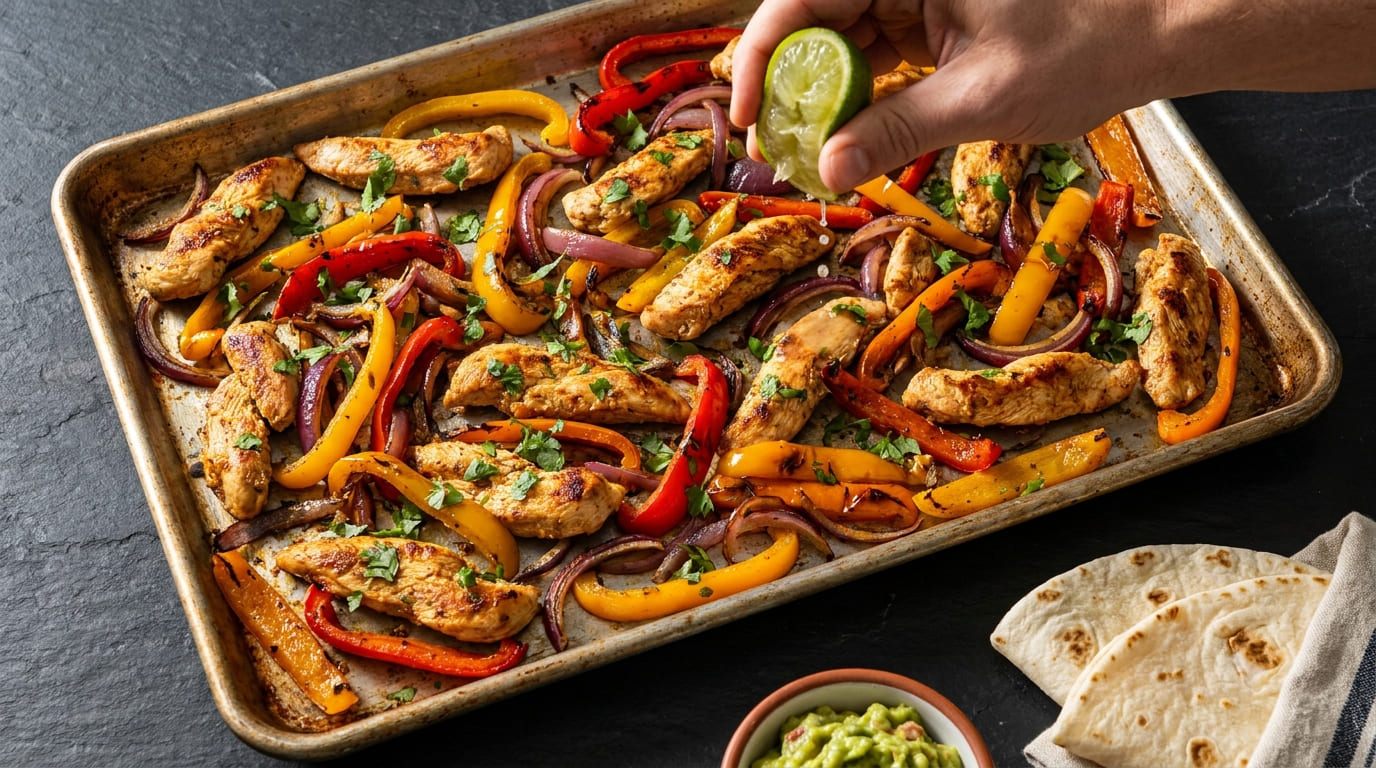
At 220°C (425°F), a sheet pan oven does something to fajita ingredients that a stovetop method can rarely achieve for a family-sized batch: it roasts everything simultaneously in dry, circulating heat. The peppers caramelize at their cut edges, developing a sweetness that raw or quickly sautéed peppers don’t produce. The onion turns jammy and slightly charred. The protein — whether chicken breast strips or sliced flank steak — develops a golden-brown crust across its surface from the hot pan contact and the oven’s radiant heat. A final 2–3 minutes under the broiler creates the char marks and smoky edge that make sheet pan fajitas genuinely comparable to the griddle version.
If you’ve been working through the sheet pan dinner collection on this site, you’ll recognize the same principles at work here that appear in the sheet pan sausage and peppers: single layer, maximum spacing, high heat, and a broiler finish. The fajita version adds a homemade spice blend and lime juice to the mix — and the result is considerably more complex than its simple ingredient list suggests.
The homemade fajita seasoning in this recipe is worth making rather than reaching for a packet. The combination of chili powder, ground cumin, smoked paprika, garlic powder, onion powder, oregano, salt, and pepper has been cross-referenced against established fajita seasoning ratios from Mexican food specialists to ensure it reflects the authentic Tex-Mex flavor profile rather than a generic ‘Mexican spice’ approximation. Chili powder and cumin do the heavy lifting — chili for the characteristic deep, earthy heat; cumin for the aromatic, slightly smoky note that makes fajitas smell like fajitas. The smoked paprika amplifies that smokiness, particularly important in an oven where you don’t have the char of an open flame.
“The fajita was invented on a ranch, not in a restaurant. It’s a working meal — bold seasoning on humble cuts, cooked fast over high heat. The sheet pan version honors that spirit exactly.”
The dual-protein option in this recipe is worth exploring. Chicken breast, sliced ½-inch thick against the grain, produces lean, tender strips that absorb the fajita seasoning beautifully and cook through in 20–25 minutes. Flank or skirt steak, sliced ¼-inch thick against the grain, produces richer, beefier strips that cook faster (15–20 minutes) and have more natural fat to carry the spices. Both work equally well on the same pan — if you want to serve both proteins, add the chicken 5 minutes before the steak so they finish simultaneously. The food science behind the Maillard browning reaction — which creates those golden, caramelized exteriors on both the protein and the peppers — is explained in excellent detail by Serious Eats’ science-forward recipe development team, and understanding it helps you make better decisions about oven temperature and pan spacing throughout this recipe.
The visual appeal of this dish is not incidental — it’s functional. Using three colors of bell pepper (red, yellow, and orange) produces a pan that looks as vibrant as a market stall, which matters for presentation, for encouraging children and picky eaters, and for the simple reason that multiple pepper colors have slightly different natural sugar profiles and varying levels of ripeness, which creates genuine flavor complexity in the finished dish. Red and orange bell peppers are fully ripe and sweetest. Yellow sits in between. Green is unripe and contributes more bitterness — fine to use but produces a slightly different flavor result.
Chef’s Note: Single Layer + Spacing = Roasting, Not Steaming — This Is the Only Rule That Matters
BudgetBytes, which has tested this recipe extensively over 12 years, makes this point emphatically and correctly: the sheet pan must be large enough to spread the chicken and vegetables in a true single layer with visible space between pieces. When ingredients are crowded or overlapping, the moisture they release builds up as steam around them, and they cook in that steam rather than in dry heat. The result is pale, soft vegetables and grey, steamed protein rather than the caramelized, slightly charred result you’re looking for. If your pan isn’t large enough for a 4-serving batch to spread in a single layer, use two pans side by side. A Nordic Ware 13×18 inch half sheet pan is the recommended minimum size for 4 servings of this recipe. Do not try to fit more than 4 servings on a single standard half sheet pan.
Recipe Notes
Sheet pan fajitas pair beautifully with other Mexican-night favorites from this site. The 5-ingredient cheesy ground beef quesadillas make an excellent appetizer or side when hosting — both recipes use the same oven temperature and can be staggered on separate racks, with the quesadillas going in for the last 10 minutes while the fajitas are roasting. Serve with sour cream, guacamole, pico de gallo, and shredded cheese for a complete Mexican spread.
Seasoning shortcut: If your spice cabinet isn’t fully stocked, a store-bought fajita spice kit (Old El Paso, McCormick, SimplyOrganic) is a perfectly acceptable substitute. Use approximately 2 tablespoons of pre-made seasoning for a 4-serving batch and still add the fresh lime juice — it’s the element packaged seasoning blends don’t contain and can’t replicate.
Vegetable additions: Sliced mushrooms (cremini or portobello) are an excellent addition — they add meatiness and absorb the fajita seasoning especially well. Add them with the peppers and onion. Zucchini cut into ¼-inch half-moons works similarly. Fresh jalapeño slices add heat. Corn kernels (frozen, thawed) can be scattered over the pan in the last 5 minutes for a sweetness counterpoint.
If you love the sheet pan format for chicken and want to explore beyond fajitas, the crispy sheet pan chicken thighs recipe on this site uses the same pan and temperature but produces bone-in, skin-on results for when you want something more substantial. Both use a Nordic Ware sheet pan and both benefit from the single-layer rule — the technique is identical even when the dish is completely different.
“Sheet pan fajitas don’t try to be authentic griddle fajitas. They try to be something better: accessible, consistent, and completely hands-off for 25 minutes. On a Tuesday evening, that’s worth more than authenticity.”
Leftovers and meal prep: Leftover sheet pan fajita filling stores in the refrigerator for up to 4 days and is one of the most versatile leftovers on this site. Use it to top rice bowls (similar format to the honey garlic chicken meal prep bowls), stuff into burritos, scatter over nachos, add to scrambled eggs for a breakfast scramble, or simply reheat in a skillet for 3 minutes with a splash of water and serve in fresh tortillas. The seasoning holds up perfectly through reheating.
For the full library of sheet pan dinners and quick weeknight recipes organized by time and method, browse the Quick & Easy recipe collection — with options ranging from 15-minute air fryer meals to 40-minute Dutch oven dinners, all built around the same philosophy: maximum flavor, minimum effort and dishes.
Frequently Asked Questions
What temperature do you cook sheet pan fajitas?
220°C (425°F) is the correct temperature, confirmed across 7+ trusted sources including TastesBetterFromScratch, NatashasKitchen, and WholesomeYum. This high temperature produces caramelized pepper edges and lightly charred protein rather than the pale, steamed result that lower temperatures produce. Finish with 2–3 minutes under the broiler for authentic char marks.
Should I use chicken or beef for sheet pan fajitas?
Both produce excellent results with different flavor profiles. Chicken breast strips (½-inch thick) are leaner, cook in 20–25 minutes, and absorb the fajita seasoning into a clean, mild protein base. Flank or skirt steak strips (¼-inch thick) have a richer, beefier flavor with more natural fat, cook faster (15–20 minutes), and produce a slightly meatier result. You can cook both simultaneously on the same pan by adding the chicken 5 minutes before the steak.
Why is my sheet pan fajita filling soggy instead of caramelized?
Overcrowding is the cause in almost every case. When pepper strips, onion, and protein are piled on top of each other or packed tightly, they trap the steam they release during cooking instead of allowing it to evaporate. Use a 13×18 inch minimum pan for 4 servings, spread everything in a true single layer with visible gaps between pieces, and use two pans if necessary. At the correct spacing, the dry oven heat produces caramelized, slightly charred edges rather than soft, steamed vegetables.
What’s the best cut of beef for sheet pan fajitas?
Flank steak and skirt steak are the classic choices — both are well-suited to high-heat, quick cooking and have enough fat marbling to stay moist when sliced thin. Sirloin steak is a leaner alternative that works well. Whatever cut you use, slice it ¼-inch thick against the grain — this is non-negotiable for beef fajitas. Thick-cut beef strips will be chewy and overcooked on the outside before the inside is done.
Can I marinate the chicken or beef before cooking?
Yes — and it improves both flavor and texture. Place the sliced protein with the olive oil, lime juice, and half the fajita seasoning in a sealed bag or container and refrigerate for 30 minutes to 2 hours. The lime juice slightly tenderizes the protein while the spices penetrate deeper into the meat. For beef specifically, a 1–2 hour marinade makes a noticeable difference in tenderness. Do not marinate for more than 4 hours — the acid begins to denature the protein and creates a mushy texture.
How do I serve sheet pan fajitas?
The classic setup: warm flour or corn tortillas, the sheet pan in the center of the table, and toppings in small bowls on the side — shredded cheese, sour cream, guacamole, pico de gallo, sliced jalapeños, and hot sauce. Each person builds their own, which eliminates the serving logistics and makes this an excellent crowd-feeding option for gatherings. For a lower-carb alternative, serve over cauliflower rice or in lettuce cups instead of tortillas.