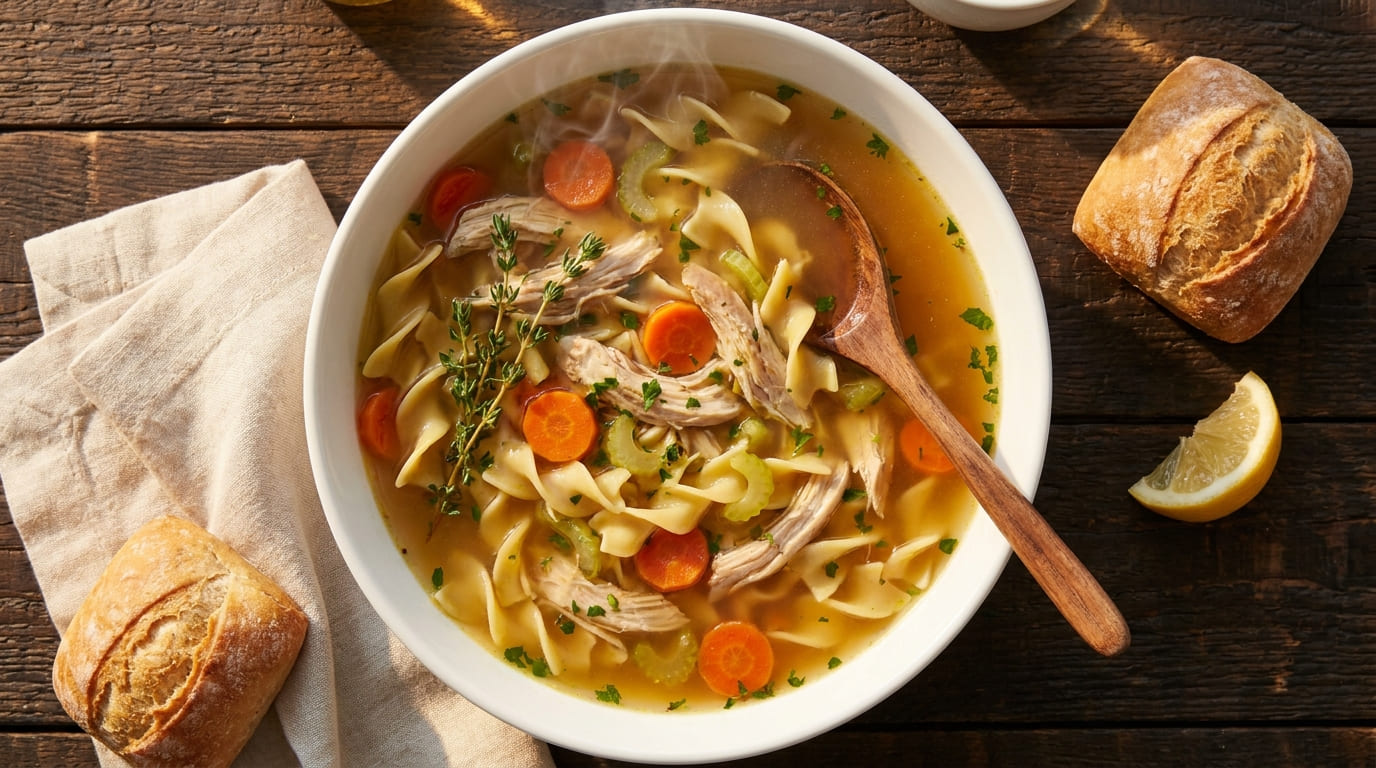
There are meals that feed people, and then there are meals that take care of them. Chicken noodle soup belongs firmly in the second category. It is the dish that appears when someone is sick, when the weather turns cold without warning, when a long week finally catches up with you on a Friday evening. It is the centerpiece of the soups and stews collection on this site — and with good reason. No other dish delivers this particular combination of warmth, nourishment, and genuine comfort with this little effort.
This recipe produces a true chicken soup from scratch — not a can dressed up with additions, not a shortcut that tastes like one. Real bone-in chicken cooked in broth until tender enough to shred with two forks. A proper mirepoix of carrots, celery, and onion sautéed in butter until sweet and soft. Thyme, oregano, and a bay leaf simmered into the broth for 20 minutes until it smells like something wonderful has been happening in the kitchen. And then, right at the end, wide egg noodles dropped in dry and simmered just long enough to become tender without turning soft.
This is the third recipe in the one pot meal series on this site. The one pot chicken and rice uses the same Dutch oven logic — one vessel, one sequence, everything built in layers — but takes the dish in a completely different direction: creamy, rice-based, parmesan-finished. Together with this soup, they make a compelling case for why the one pot approach is the most underrated technique in weeknight cooking. Less washing. More flavor. Every component influences every other component. The pot does the teaching.
The timing breakdown for this recipe is worth understanding because it differs from most soups. Forty minutes total: 10 minutes of prep, 20 minutes of simmering the chicken in the broth (during which you do nothing but let it be), 5 minutes of shredding the chicken and returning it to the pot, and 6–7 minutes for the noodles. Only the first 10 minutes and the last 15 minutes require you to be at the stove. The middle 20 minutes are genuinely free time — read, set the table, pour a glass of something, or do absolutely nothing. The pot is working.
“Chicken noodle soup is the closest thing to a universal meal that exists. Every culture has a version of it. Every family has a memory of it. Every sick day, cold evening, and long week has been made marginally better by a bowl of it.”
The quality of the broth matters more in this dish than in almost any other recipe on this site. In a cream sauce or a glaze, other ingredients carry the flavor load and an underwhelming broth goes largely unnoticed. In a clear soup, the broth is the flavor — it has nowhere to hide. Low-sodium chicken broth from a good brand (Kitchen Basics, Swanson Natural Goodness) produces a far better result than generic stock. If you want to go further, Better Than Bouillon chicken base dissolved in warm water produces a remarkably deep, savory broth that punches significantly above its price and convenience level.
From a nutrition standpoint, this soup punches above its weight in a way that’s worth noting. The USDA protein data shows that a single large boneless chicken breast provides over 50 grams of complete protein when cooked — making this one of the highest-protein soups you can prepare at home. The egg noodles provide the carbohydrates for sustained energy, and the mirepoix contributes meaningful amounts of vitamin A (from the carrots), vitamin K (from the celery), and various antioxidants. The broth itself, when made from a quality base, provides collagen, sodium, and the trace minerals that make chicken soup genuinely supportive of wellbeing beyond its reputation.
Chef’s Note: Cook the Noodles 1 Minute Less Than the Package — And Do NOT Store Them in the Soup
Two connected points that matter significantly for this recipe. First: add the egg noodles to the simmering soup and cook them for 1 minute less than the package instructions state for al dente. They will continue cooking in the hot broth from carryover heat even after the pot comes off the stove — pulling them 1 minute early guarantees they reach the table at perfect tender-but-firm texture rather than soft and bloated. Second, and critically: if you’re making this soup ahead of time or planning to store leftovers, cook the noodles separately in a pot of boiling salted water and keep them apart from the soup. Egg noodles left in broth in the refrigerator absorb liquid continuously, swelling until they’re soft and mushy by the next day and the broth volume has nearly disappeared. Store the soup and noodles separately, then combine individual portions when reheating. This single habit extends the quality of leftover chicken noodle soup from 1 day to 4 days.
Ingredients
The Soup Base
The Mirepoix (Classic Soup Vegetables)
Seasoning
Noodles & Finishing
How to Make It
Sauté the Mirepoix
In a large Dutch oven or stockpot, melt the butter over medium-high heat. Add the carrot coins, thinly sliced celery, and finely diced onion. Sauté for 5–7 minutes, stirring occasionally, until the vegetables begin to soften and the onion is translucent. The vegetables don't need to be fully cooked — they will continue cooking in the broth. Cut all vegetables to the same thickness so they cook evenly and fit on a spoon with a piece of noodle.
Add Garlic and Bloom the Seasoning
Add the minced garlic to the softened vegetables and stir for exactly 60 seconds until fragrant. Do not let the garlic brown — it turns bitter quickly. Add the dried thyme, dried oregano, salt, black pepper, and bay leaf. Stir for another 30 seconds to bloom the dried herbs in the residual fat before any liquid is added — this releases their aromatic compounds more effectively than adding them directly to the broth.
Add Broth and Chicken — Simmer Until Cooked Through
Pour in the chicken broth and stir to combine. Add the whole raw chicken breasts directly into the pot — submerge them in the broth. Bring to a rolling boil over high heat, then reduce the heat to medium-low so the soup maintains a steady simmer with small, consistent bubbles. Cover and simmer for 18–20 minutes until the chicken is fully cooked through. The internal temperature of the largest breast should read 74°C (165°F) at the thickest point. Don't rush this step — a full simmer is what creates the rich, golden, layered broth flavor that separates homemade from canned.
Remove and Shred the Chicken
Use tongs or a slotted spoon to transfer the cooked chicken breasts to a cutting board. Use two forks to shred the meat into bite-sized pieces — pull the forks in opposite directions against the grain of the muscle. The chicken should shred easily; if it's resisting, it needs another 2–3 minutes in the broth. Remove and discard the bay leaf from the soup. Taste the broth at this point — this is the moment to add additional salt if needed. Adjust before the noodles go in, as noodles absorb salt from the broth.
Return Chicken and Add Egg Noodles
Return the shredded chicken to the pot. Bring the soup back to a gentle boil. Add the wide egg noodles dry and directly to the boiling soup. Reduce the heat to medium and cook, stirring occasionally, for 6–7 minutes — or 1 minute less than the package instructions for al dente. See Chef's Note above. The noodles will absorb some broth as they cook — if the soup looks too thick, add an extra splash of broth.
Finish with Parsley, Lemon, and Serve
Remove the pot from the heat. Stir in the freshly chopped flat-leaf parsley and, if using, a squeeze of fresh lemon juice. The lemon is not traditional in chicken noodle soup, but TheKitchn's professional recipe developers confirm it as the single most effective finishing touch — the acid brightens every flavor in the bowl without announcing itself as lemon. Taste one final time and adjust salt. Ladle into warmed bowls and serve immediately with crusty bread or sourdough on the side.
Recipe Notes
This comforting dinner is the most forgiving recipe on the site. It welcomes substitutions, shortcuts, and additions without losing its essential character. For more weeknight chicken dinners that follow a similar sear-then-simmer approach, the full chicken dinner collection is organized by method and time — from air fryer to sheet pan to skillet.
Rotisserie chicken shortcut: Multiple trusted sources — TheKitchn, AveriecCooks, TastesBetterFromScratch — recommend a store-bought rotisserie chicken as the fastest route to excellent chicken noodle soup. Skip Step 03 entirely. Add the broth, seasonings, and bay leaf to the sautéed vegetables, simmer for 10 minutes to develop flavor, then add 2 cups of shredded rotisserie chicken meat and proceed to Step 05 with the noodles. Total time drops to under 25 minutes.
Noodle alternatives: Wide or extra-wide egg noodles are the traditional choice — they hold up in broth better than thin noodles and carry a satisfying chew. For a homemade version, fresh egg noodles or fresh pasta cut into ribbons cook in 2–3 minutes and are extraordinary in quality. Other short pasta (ditalini, small shells, orzo) also works well — follow the same principle of adding dry, 1 minute less than the package, and storing separately from the soup.
If you frequently cook and shred chicken for weeknight meals, consider building a habit of cooking a larger batch in advance. The same technique used in this recipe — simmering boneless breasts until shreddable — works for honey garlic chicken thighs and a dozen other preparations. Shredded chicken kept in the refrigerator for up to 4 days cuts the prep time on this soup to under 15 minutes.
“Chicken noodle soup asks very little from you. A pot, some patience, and decent ingredients are all it takes. What it gives back — warmth, nourishment, the specific comfort of something genuinely made from scratch — is entirely disproportionate to the effort.”
Freezing: Freeze the soup WITHOUT the noodles in airtight freezer bags or containers for up to 3 months. Cooked egg noodles freeze very poorly — they disintegrate when thawed. Freeze the broth, chicken, and vegetables; when ready to eat, thaw overnight in the refrigerator, reheat to a simmer, and cook fresh noodles to add at serving time. Labelled correctly, this becomes one of the best weeknight shortcuts available: a full chicken soup ready in 15 minutes once thawed.
Serving suggestions: Crusty sourdough or a soft dinner roll for dipping is the classic pairing. For a more substantial meal, serve alongside crispy air fryer broccoli — the caramelized, slightly bitter broccoli provides an excellent textural and flavor contrast to the golden, savory soup. A simple side salad with a lemon vinaigrette also works well, particularly in warmer months when a lighter accompaniment is preferred.
For more warming, minimal-dish weeknight dinners, browse the full Quick & Easy collection — sorted by time, method, and ingredient count so you can find the right dinner for whatever the evening calls for.
Nutrition Profile (Per Serving)
Frequently Asked Questions
How long does one pot chicken noodle soup take from scratch?
40 minutes total: 10 minutes of prep (chopping vegetables), 20 minutes of simmering the chicken in broth (passive time), 5 minutes of shredding, and 6–7 minutes for the noodles. Only the first 10 and last 15 minutes require active attention — the middle 20 minutes are entirely hands-off.
Can I use chicken thighs instead of breasts?
Yes — boneless, skinless chicken thighs work beautifully and stay even juicier than breasts. They also shred slightly more easily due to the higher fat content in the meat. The simmer time and internal temperature target (74°C / 165°F) remain exactly the same.
Why do I add the egg noodles at the end?
Egg noodles added too early become soft and fall apart in the broth. Adding them in the last 6–7 minutes produces noodles that are tender but still hold their shape. Pull them 1 minute before the package instructions say they’re done — they continue cooking from carryover heat and will be perfect by the time the soup reaches the bowl.
Can I freeze chicken noodle soup?
Yes — but freeze it without the noodles. Cooked egg noodles disintegrate when frozen and thawed, absorbing all the broth and becoming mushy. Freeze the broth, chicken, and vegetables for up to 3 months. When ready to serve, thaw overnight, reheat to a simmer, and add fresh dry noodles to cook in the last 7 minutes.
My broth tastes bland — how do I fix it?
Three approaches: (1) Add a teaspoon of Better Than Bouillon chicken base — it adds immediate depth. (2) Add more salt a little at a time — bland soup is almost always under-seasoned soup. (3) Add a squeeze of lemon juice — acid doesn’t make the soup taste lemony but it amplifies all the other flavors. Let the soup simmer uncovered for 5 more minutes to concentrate it slightly before adding any of the above.
Why does my leftover soup have no broth left?
The egg noodles absorbed it overnight. This is why the Chef’s Note recommends storing noodles and soup separately. If it’s already happened, simply add fresh chicken broth when reheating — bring to a simmer and add ½ cup of broth per serving until the soup is at your preferred consistency. The flavor is still there; you’re just replacing the absorbed liquid.