There are dinners that feed people, and then there are dinners that genuinely comfort them — the ones that smell incredible while they’re cooking, fill the kitchen with warmth, and produce something that makes everyone at the table quiet for a moment when they take the first bite. This one pot chicken and rice is firmly in the second category. It belongs alongside every great dish in the chicken dinner collection on this site — and it may become the one that gets made most often.
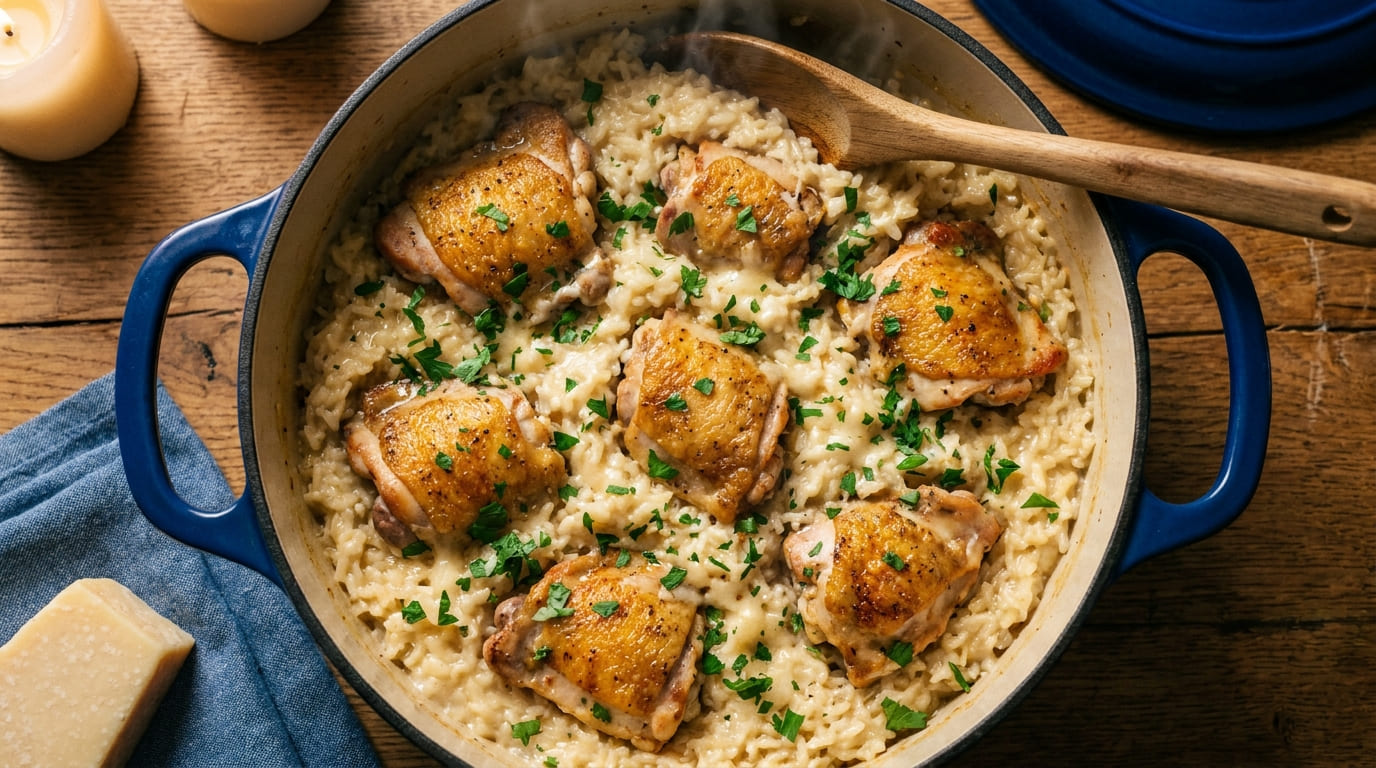
The concept is deceptively simple. Chicken thighs are seasoned and seared until golden, then set aside while a base of onion and garlic cooks down in the same pot. Unrinsed long-grain white rice is added and briefly toasted in the aromatic butter — just 60 seconds, but it makes a difference to the final flavor. Chicken broth and heavy cream go in together, bringing the liquid to a simmer. The chicken pieces nestle back into the pot, the lid goes on tight, and for the next 18–20 minutes, the whole dish does exactly what you need it to do on a busy weeknight: it takes care of itself.
What emerges is something between a creamy risotto and a hearty casserole — without the tedious stirring of the former or the baking time of the latter. The starch released by the rice as it cooks thickens the liquid naturally, just as it does in a true risotto. The chicken broth and heavy cream provide richness and depth. The seared chicken stays juicy because the fat in the thigh meat is protected by the surrounding liquid during the simmer. And the parmesan, stirred in right at the end, adds salt, umami, and a final layer of creaminess that pulls the entire dish together into something that tastes far more labored than it is.
“The Dutch oven is the original one-pot wonder. It sears, it sautés, it braises, it simmers — all in the same vessel, all building flavors on top of each other. This chicken and rice recipe uses every one of those capabilities in sequence.”
If you’ve made the one pan creamy Tuscan chicken from this site, you already know the kind of depth a properly built cream sauce can bring to chicken in a single pan. This recipe operates on the same principle but takes it further — the rice cooks directly in the sauce, absorbing all of that flavor into every grain, rather than the sauce being served alongside a separate carbohydrate. The result is a more cohesive, self-contained dish that works as a complete meal with nothing else required.
The Dutch oven is the ideal vessel for this recipe — and worth investing in if you don’t already own one. Its thick base distributes heat evenly, preventing the bottom layer of rice from scorching during the covered simmer. Its tight-fitting lid traps steam perfectly, maintaining the precise liquid ratio that produces properly cooked (rather than crunchy) rice. Any Le Creuset, Lodge, or Staub enameled Dutch oven in the 5–6 quart range works beautifully. If you don’t have a Dutch oven, a heavy-bottomed stockpot with a lid that seals tightly is the next best option.
For those who want to make this recipe with an Instant Pot, it adapts exceptionally well to the pressure cooker method — sear the chicken on the Sauté function, build the aromatics, add all the liquids and rice, then pressure cook on HIGH for 5 minutes with a 10-minute natural release. The result is equally creamy, even faster, and completely hands-off during the cooking phase.
Chef’s Note: Do NOT Rinse the Rice — The Starch Is the Point
Every other rice recipe you’ve ever made has told you to rinse the rice until the water runs clear. This recipe is the exception, and the reason is fundamental. Surface starch on unrinsed rice dissolves into the cooking liquid as the rice simmers, naturally thickening the broth-and-cream mixture into a glossy, clingy sauce that coats every grain — exactly like the starch released by arborio rice in a traditional risotto. If you rinse the rice, you remove that starch before it can do its job, and you end up with loose, brothy rice rather than creamy, risotto-style rice. Multiple trusted sources (CarlsbadCravings, ThisHomeKitchen) specifically identify this as the most important technique insight for this recipe type. For this one dish: skip the rinse.
Chef’s Note: Cut the Chicken Small and Uniform — Exactly 1 Inch
Boneless chicken thighs cut into 1-inch pieces cook through evenly during the 18–20 minute rice simmer time. Larger chunks (2 inch or more) may not reach 74°C (165°F) by the time the rice is fully cooked, requiring you to either continue cooking (which overcooks the rice) or remove the rice and finish the chicken separately (which defeats the one-pot purpose). Small, uniform pieces also distribute more evenly through the dish, ensuring every serving gets an equal proportion of chicken. Use a sharp chef’s knife and take 2 extra minutes to cut the pieces consistently — it directly affects the final result.
Recipe Notes
This one pan chicken and rice dish is a complete meal on its own, but it pairs extraordinarily well with a simple vegetable side. Crispy air fryer broccoli is the ideal accompaniment — the slight bitterness of the caramelized broccoli cuts through the richness of the cream rice in a way that makes both components taste better. The two dishes can run simultaneously with no timing conflict: start the chicken and rice, and put the broccoli in the air fryer 10 minutes before the rice finishes.
Instant Pot method: This recipe adapts perfectly to the Instant Pot. Use the Sauté function for Steps 01–03. Add the liquids and chicken as in Step 04. Seal the lid, set to Pressure Cook on HIGH for 5 minutes, then allow a 10-minute natural pressure release before manually venting. Stir in parmesan as directed. The result is equally creamy with even less active time.
Rice variations: Long-grain white rice is the most reliable choice here. Jasmine rice produces a slightly more fragrant, floral result with a very similar texture. Basmati rice adds a nuttier flavor and stays slightly more separate in texture. Brown rice requires significantly more liquid (add an extra ½ cup broth per cup of rice) and a longer simmer time (30–35 minutes covered) — it’s a viable option but changes the character of the dish considerably. Do not use short-grain or sushi rice — it releases too much starch and can become gummy.
Vegetable additions: Frozen peas stirred in during the last 3 minutes of cooking add color, sweetness, and a satisfying textural contrast. Diced carrots and celery can be added with the onion at Step 02. Fresh baby spinach wilted in after the parmesan adds nutrition and color without affecting the flavor balance. Asparagus tips added in the final 5 minutes of simmering work beautifully in spring.
If you want the same comforting chicken-and-starch combination but in a completely different format, the honey garlic chicken thigh recipe from the 5-ingredient series pairs with rice as a separate element — it takes more dishes but produces a different kind of satisfaction, where the sticky sweet glaze is the star rather than the creamy rice.
“A tight lid and a low simmer are doing all the work here. The Dutch oven was built for exactly this — trapping steam, maintaining even heat, and turning a handful of honest ingredients into something that tastes like it took all afternoon.”
Make-ahead and storage: This dish stores exceptionally well. Leftovers keep in an airtight container for up to 4 days in the refrigerator. The rice will absorb remaining moisture as it sits — when reheating, add 2–3 tablespoons of chicken broth or water per serving and warm over low heat in a covered pot, stirring once or twice. The cream sauce reconstitutes beautifully with this method. Avoid the microwave for reheating if texture matters to you — it heats unevenly and tends to dry out the rice at the edges.
One-pot meals are among the most searched recipes for weeknight cooking, and for good reason — they deliver the most flavor with the fewest dishes. The full Quick & Easy collection is organized by method and time, making it easy to find sheet pan, skillet, and one-pot recipes that all follow the same minimum-mess, maximum-flavor philosophy.
Frequently Asked Questions
Why do I not rinse the rice for this recipe?
The surface starch on unrinsed rice dissolves into the cooking liquid as it simmers, naturally thickening the broth and cream into a creamy, glossy sauce — exactly like arborio rice does in risotto. Rinsing removes that starch before it can thicken the sauce, leaving you with loose, brothy rice instead of creamy, risotto-style rice. For this specific recipe: skip the rinse.
Can I use chicken breasts instead of thighs?
Yes — boneless skinless chicken breasts work and several trusted sources specifically use them. The sear time and simmer time remain identical. Breasts are slightly leaner and have less fat, which makes them marginally more prone to drying out if overcooked. Pull the pot off the heat as soon as the chicken reaches 74°C (165°F) — don’t let it sit on heat once done.
Why is my rice still crunchy?
Three possible causes: (1) the lid wasn’t tight enough and steam escaped — use foil under the lid if it doesn’t seal well; (2) the simmer was too low, slowing cooking; (3) the heat was reduced too much and liquid stopped absorbing. If the liquid is absorbed but rice is still firm, add ¼ cup hot broth, cover, and simmer 5 more minutes.
Can I make this in the Instant Pot?
Yes. Use Sauté function for Steps 01–03. Add broth, cream, and chicken as in Step 04. Seal the lid. Pressure Cook on HIGH for 5 minutes, then natural release for 10 minutes before manually venting. Stir in parmesan off the heat. The result is identical in creaminess with less active cooking time.
What rice works best in this recipe?
Long-grain white rice (standard or jasmine) is the best choice — it absorbs liquid steadily without becoming mushy. Basmati adds a nuttier, more aromatic flavor. Brown rice requires an extra ½ cup of broth and 30–35 minutes of covered simmer time. Do not use short-grain or sushi rice — the excess starch produces a gummy result in this liquid ratio.
Can I add vegetables to this dish?
Absolutely. Frozen peas stirred in during the last 3 minutes are the easiest addition. Diced carrots and celery added with the onion at Step 02 work well and add sweetness. Baby spinach wilted in after the parmesan adds color and nutrition. For heartier vegetables like broccoli or asparagus tips, add them 5 minutes before the end of the simmer time.
Why does this dish get thicker as it cools?
The starch released by the rice continues to set as the dish cools, thickening the sauce further. This is completely normal and not a sign that anything has gone wrong. Reheat with 2–3 tablespoons of chicken broth per serving, stirring over low heat, and the sauce returns to its original glossy consistency within 2–3 minutes.