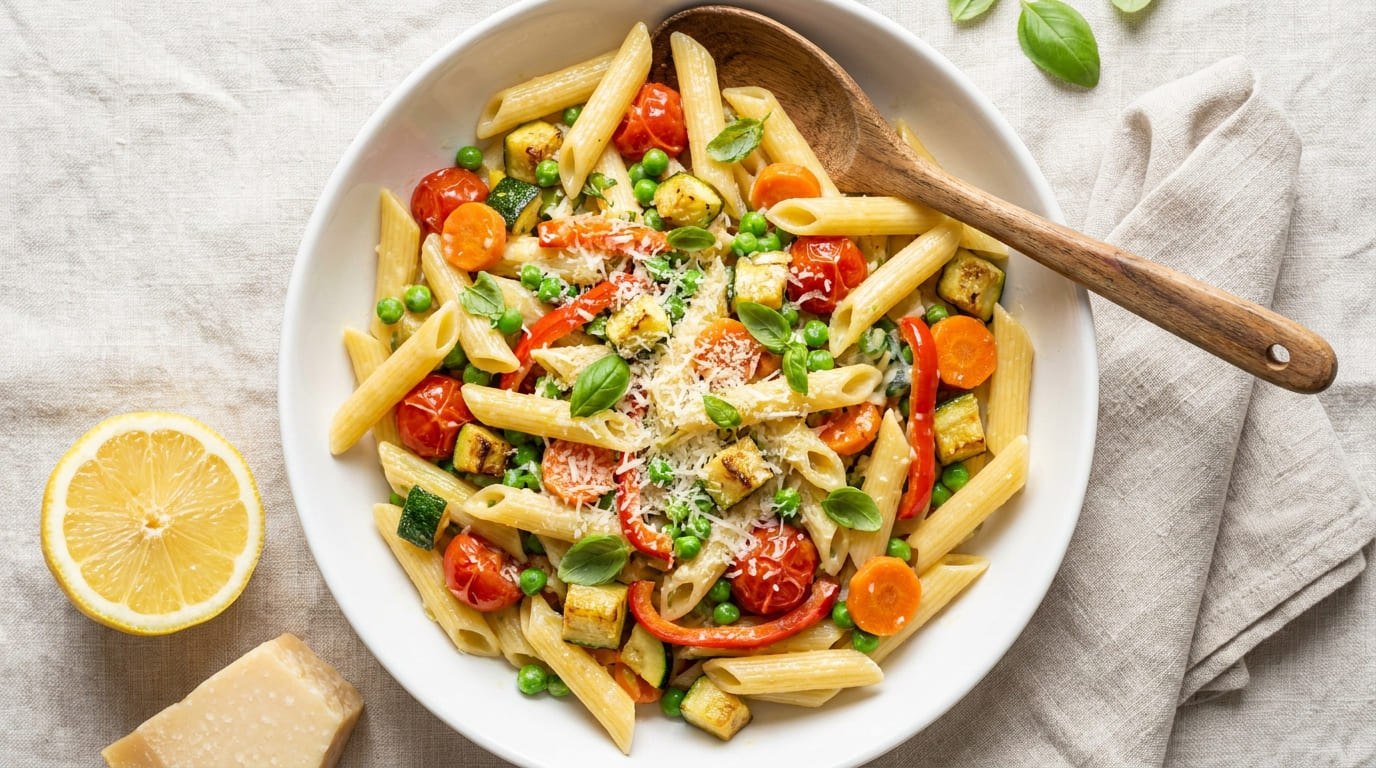
Pasta primavera — primavera meaning springtime in Italian — is one of the great Italian-American dishes, built on the simple idea that the best pasta sauce is often just the freshest vegetables available, treated simply and well. As the centerpiece of the vegetarian dinner collection on this site, this one pot pasta primavera represents everything that meatless cooking should be: vibrant, satisfying, deeply flavorful, and genuinely faster than anything involving meat.
The dish has an interesting origin. It emerged in New York in the 1970s when disco-era Italian-American chefs began showcasing the season’s best produce by tossing it with pasta in a light sauce. In an era when heavy French cuisine dominated restaurant menus, pasta primavera was a radical statement of freshness and simplicity. The word primavera carried genuine meaning — these were vegetables at their seasonal peak, prepared quickly, with nothing to hide behind.
The one-pot method used here takes that original spirit and applies a technique borrowed from the world of garlic butter pasta — cooking the pasta directly in the cooking liquid rather than separately. As the penne simmers in the vegetable broth, it releases starch that thickens the liquid into a light, silky sauce. No straining, no colander, no wasted pasta water. When the cream and parmesan are stirred in at the end, that starchy base transforms into a proper sauce that clings to every piece of penne and coats every vegetable with the same lemon-bright richness.
There is a meaningful art to the vegetable selection and timing in this recipe. Pasta primavera fails — becomes mushy, monochrome, and texturally flat — when all the vegetables are added at the same time and cooked to the same level of softness. The solution, confirmed across every reliable source for this recipe type, is a two-stage approach: dense vegetables (zucchini, bell pepper, carrot) go in first and sauté before any liquid is added. Quick-cook vegetables (peas, cherry tomatoes, spinach) go in only in the final 3–5 minutes. This produces a dish with three or four distinct textures in every bowl: al dente pasta, slightly caramelized dense vegetables, and bright, just-warmed quick-cook vegetables.
“Pasta primavera is a democracy of vegetables — every one earns its place on its own merits. The only rule is that each one should reach the bowl exactly as it should be: no mushier, no rawer, than its ideal state.”
The lemon is not optional. Multiple trusted recipe sources identify the lemon zest and juice added at the very end as the element that transforms this dish from pleasant to genuinely craveable. The acid cuts through the richness of the parmesan cream, brightens all the vegetable flavors simultaneously, and adds a faint citrus fragrance that makes this pasta feel like spring regardless of what season you’re making it in. Use a microplane to zest the lemon before juicing it — the zest carries a more concentrated citrus flavor than the juice alone.
This is also one of the most adaptable recipes on this site. The vegetable combination listed here — zucchini, red bell pepper, carrot, peas, cherry tomatoes, and spinach — is a reliable all-season base, but the recipe works with almost any vegetable you have on hand. Asparagus tips in spring, cherry tomatoes in summer, shaved Brussels sprouts in autumn, broccoli florets year-round. The technique stays constant; only the cast of vegetables changes.
This recipe is firmly vegetarian as written. For vegan adaptation, simply omit the parmesan and butter, and replace the heavy cream with full-fat oat cream or cashew cream. The lemon-starchy-broth sauce is flavorful enough without the dairy, particularly when finished generously with extra olive oil and a handful of nutritional yeast in place of the parmesan.
Chef’s Note: Cut Every Vegetable the Same Size as Your Pasta
The rule for pasta primavera that every reliable source agrees on: all vegetables should be cut to approximately the same size as a bite of your pasta — ½ to 1 inch. This ensures that when you twirl the pasta onto a fork, a vegetable piece of the same size comes along with it, producing a balanced bite rather than large chunks of vegetable that overwhelm the pasta. For carrots specifically, this means thin coin slices (3–4mm) rather than the thicker cuts you might use for roasting — thin carrot coins cook through in the same 3–5 minutes as the other sautéed vegetables, while thick ones remain hard. Take 2 extra minutes of prep to be consistent with your knife work — the uniformity is what separates a well-made primavera from a thrown-together one.
Chef’s Note: Do NOT Swap Heavy Cream for Milk or Half-and-Half
TheRecipeRebel and multiple other sources warn specifically about this substitution: milk and half-and-half can curdle in a hot acidic environment (the lemon juice creates acidity in the sauce). Heavy cream’s higher fat content stabilizes it against curdling even when acid is present. The amount of cream used in this recipe is small — only 6 tablespoons for 4 servings — but it must be heavy cream. If you need a dairy-free alternative, use full-fat oat cream or full-fat coconut cream, both of which are heat-stable. Keep the heat on LOW when adding cream — never add it to a boiling liquid.
Recipe Notes
This is the second one pot meal in the series — alongside the one pot chicken and rice, it forms a strong two-recipe foundation for the one pot meals sub-category. Both follow the same logic: liquid + starch + protein-or-vegetables cooked together in one vessel, with the starch thickening the cooking liquid into the sauce. Understanding the technique in either recipe gives you the skills for the other.
Vegetable swap guide: Spring: asparagus tips (add with peas, last 5 min), snap peas, fresh English peas. Summer: corn kernels, yellow squash, extra cherry tomatoes. Autumn/Winter: shaved Brussels sprouts, broccolini, diced sweet potato (add with dense veg, 5 min sauté). Year-round: frozen broccoli florets, mushrooms, baby corn. The rule: dense or starchy vegetables go in first, delicate ones go in last.
Make it vegan: Replace butter with extra olive oil, heavy cream with full-fat oat cream, and parmesan with nutritional yeast (2 tbsp per serving) plus a pinch of extra salt. The lemon sauce holds the dish together well without dairy — it’s genuinely satisfying as a vegan version.
Add protein: This vegetarian pasta is complete as written, but pairs beautifully with a protein served alongside. The one pan creamy Tuscan chicken is an excellent companion dish — serve the pasta primavera as the base and the Tuscan chicken sliced over the top for a restaurant-quality plated dinner. Shrimp sautéed in garlic butter can also be stirred directly into the finished pasta in Step 06.
Fresh pasta variation: If you have a pasta maker or access to fresh pasta, this dish is extraordinary made with fresh fettuccine or tagliatelle. Fresh pasta cooks in 2–3 minutes rather than 10, so add it to the simmering broth only after all the vegetables are cooked through and the broth has reduced to a sauce-like consistency. Toss the fresh pasta into the sauce rather than cooking it in the broth.
“Pasta primavera is the most honest dish in Italian-American cooking. It has nothing to hide behind — no heavy sauce, no rich protein, no long cook time. It lives or dies on the quality of its vegetables and the brightness of its finish. When both are right, it’s extraordinary.”
Serving suggestions: Serve with extra parmesan and crusty sourdough bread on the side for the sauce. Crispy air fryer broccoli alongside adds texture and makes this a more substantial meal. A simple arugula salad with lemon and olive oil is the classic Italian accompaniment — the peppery bitterness of arugula provides the ideal counterpoint to the cream and parmesan.
For more pasta dinners that celebrate simple ingredients and bold flavors, the full pasta comfort food collection covers everything from garlic butter noodles to skillet beef pasta to creamy Tuscan sauce — organized by method and time.
Storage: Leftovers keep in an airtight container for up to 3 days. The pasta will absorb remaining sauce as it sits. Reheat in a pan over low heat with 2–3 tablespoons of vegetable broth per serving, tossing until the sauce reconstitutes and everything is heated through. Add a fresh squeeze of lemon and a scattering of parmesan before serving reheated leftovers — it revives the brightness.
For more vegetable-forward weeknight dinners, browse the full Quick & Easy collection — it includes sheet pan, skillet, air fryer, and one-pot options organized by time and ingredient count.
Frequently Asked Questions
What does ‘primavera’ mean in pasta primavera?
Primavera means ‘spring’ in Italian. The dish was created in New York in the 1970s to celebrate the season’s freshest vegetables — originally asparagus, peas, and other spring produce — tossed with pasta in a light sauce. The name reflects both the Italian culinary tradition it draws from and the fresh, seasonal spirit of the dish. Today it’s made year-round with whatever vegetables are freshest.
Can I use a different pasta shape?
Yes — any short pasta with a similar 9–11 minute cooking time works: fusilli, farfalle, rigatoni, or orecchiette. The key is that the pasta pieces should be approximately the same size as your vegetable pieces, so everything comes together on the fork in balanced bites. Avoid long pasta like spaghetti or linguine — it tangles during the stirring process and is harder to serve from a one-pot dish.
Why do I cook different vegetables at different times?
Different vegetables cook at different rates. Dense vegetables (carrots, zucchini, bell pepper) need 5–7 minutes of heat to soften properly. Quick-cook vegetables (frozen peas, cherry tomatoes, spinach) need only 2–5 minutes — adding them too early results in mushy, overcooked pieces. The staged approach keeps every component at its best: the dense vegetables are tender, the quick-cook ones are bright and just barely cooked.
Can I substitute milk for heavy cream?
No — several trusted sources specifically warn against this substitution. Milk and half-and-half can curdle in a hot, acidic environment (the lemon juice creates acidity in the sauce). Heavy cream’s higher fat content stabilizes it against curdling even when acid is present. For a dairy-free alternative, use full-fat oat cream or full-fat coconut cream — both are heat-stable. Add cream off the heat or on the lowest possible setting.
Can I use frozen vegetables instead of fresh?
Yes — skip the initial sauté and add all frozen vegetables directly to the broth with the pasta. They don’t need the caramelization step since they’re already softened from freezing. A bag of frozen stir-fry vegetables is a convenient shortcut that works well. Just note that the final dish will have a slightly softer texture than fresh vegetables, since frozen vegetables have already been blanched.
Why is my pasta too dry / the sauce absorbed too quickly?
Every pasta brand and pot size absorbs liquid at a different rate. If the liquid looks mostly absorbed before the pasta is fully cooked, add extra broth ¼ cup at a time and continue simmering. The pasta should be al dente with a small amount of saucy liquid remaining in the pot at the 10-minute mark — not completely dry. This remaining liquid, combined with the cream and parmesan, is what becomes the sauce.
Is this recipe gluten-free?
The recipe as written is not gluten-free because standard pasta contains wheat. To make a gluten-free version, substitute certified gluten-free pasta (rice pasta or chickpea pasta work well). Note that gluten-free pasta often absorbs liquid faster and can become mushy if overcooked — check for doneness 2–3 minutes earlier than the package directions suggest and add extra broth if needed.