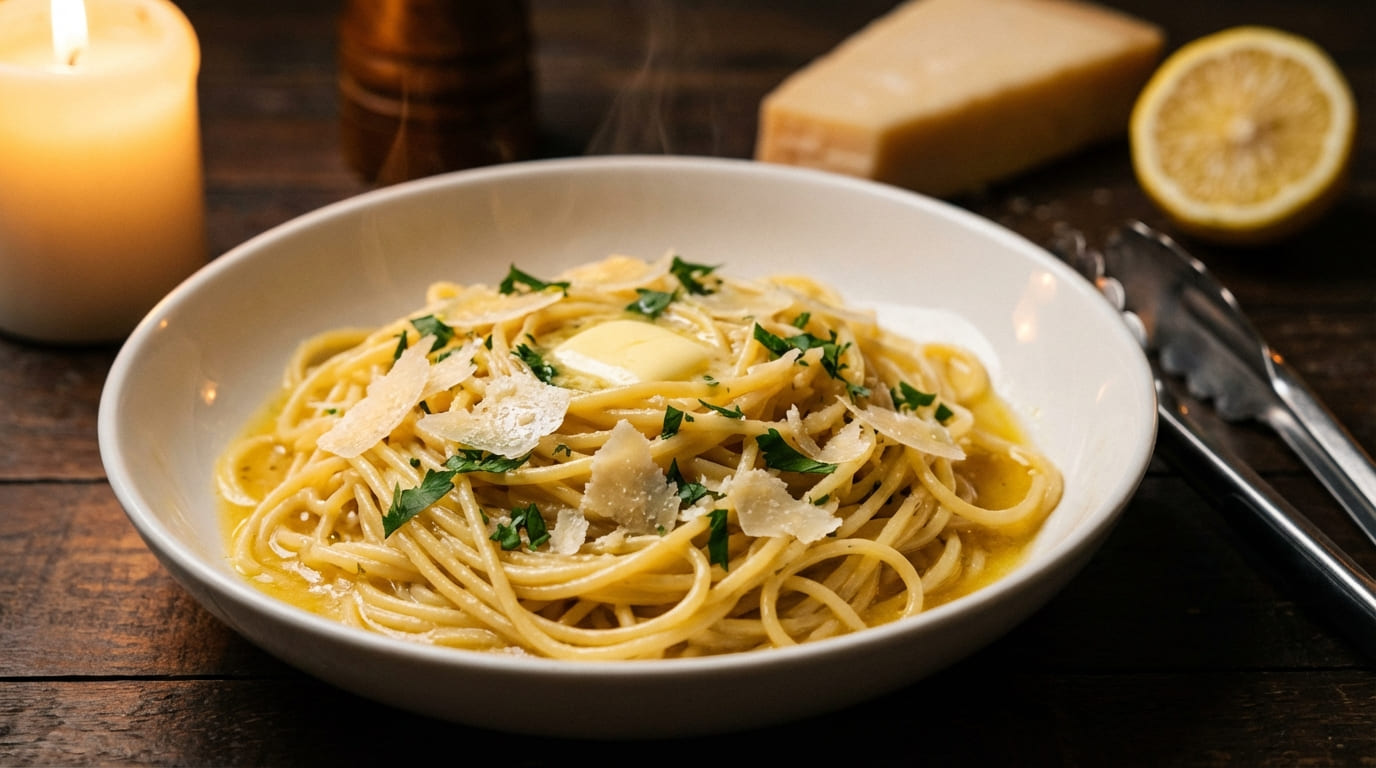
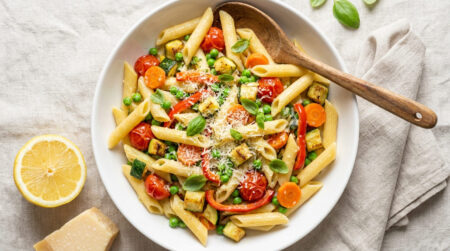
Let’s establish something important upfront: 15 minutes is not an approximation here. This garlic butter pasta — spaghetti tossed in a silky, golden-brown butter sauce with fresh garlic, a whisper of lemon, and a generous shower of freshly grated parmesan — is genuinely on the table in 15 minutes from the moment you turn on the burner. It requires 6 ingredients, one pot, and one skillet. It produces a result that tastes like you spent considerably more time than you did, and it belongs in the permanent repertoire of anyone who wants a fast, satisfying dinner on demand.
This recipe occupies a specific and important category in home cooking: the pantry pasta — a dish built entirely from ingredients you almost certainly already have. Dried spaghetti, butter, garlic, parmesan, olive oil, salt. That’s it. No cream. No special ingredients. No trip to the grocery store. On the nights when the refrigerator looks uninspiring, when you’re tired and hungry and 30 minutes feels like a long time, this is the recipe that saves dinner without requiring any planning whatsoever.
The technique behind this pasta is worth understanding, because it’s what separates it from a bowl of buttered noodles. The garlic is cooked in butter over low-to-medium heat — not high heat, never high heat — for exactly 2–3 minutes, just until it softens and releases its aromatic compounds into the fat without browning. Browning garlic in butter produces bitterness that cannot be corrected. The goal is a pale golden color and a fragrance that fills the kitchen with the unmistakable warmth of properly cooked garlic pasta. The moment you smell it — sweet, nutty, deeply savory — you pull it off the heat.
“Garlic butter pasta is not a simple dish that happens to taste good. It is a lesson in technique masquerading as simplicity. The magic is in how carefully you treat the garlic.”
Then there is the pasta water — the single most important element that most home cooks overlook. As pasta boils, it releases starch into the cooking water. That starchy water, when added to a butter sauce in small amounts, emulsifies with the fat to create a creamy, glossy sauce that clings to every strand of spaghetti without requiring cream or any additional thickener. This is the same technique used in aglio e olio, cacio e pepe, and carbonara — all of the great Roman pasta traditions are built on this principle. Reserve a full cup before you drain the pasta. You will need only a few tablespoons at first, adding more as needed until the sauce reaches a consistency that coats the back of a spoon.
The finish matters too. A small squeeze of fresh lemon juice — half a teaspoon per serving — adds brightness that cuts through the richness of the butter and makes the dish taste lighter and more alive. Freshly grated parmesan (never pre-packaged; the anti-caking agents prevent proper melting) adds salt, umami, and a mild nuttiness that pulls the whole sauce together. Fresh flat-leaf parsley adds color and a faint herbaceous note. And if you want to make this easy pasta dinner a complete meal rather than a side dish, this is where the recipe’s versatility becomes most valuable.
Garlic butter pasta is also, arguably, the most important quick pasta recipe to master because it’s the foundation of an enormous number of other dishes. Learn the garlic butter base and you have the core technique for garlic shrimp pasta, garlic butter salmon pasta, white wine pasta sauce, and dozens of other variations that all start from exactly this point. The full pasta comfort food collection covers many of those next steps — once you’ve mastered this one, the rest follow naturally.
And if you’re looking to expand beyond pasta into the full range of sauce and side recipes, garlic butter itself is one of the most versatile sauces in the repertoire — excellent on bread, vegetables, seafood, and roasted chicken, all made from the exact same base technique you’ll learn here.
One final note before the recipe: this dish demands attention at only one moment — when the garlic goes into the butter. Everything else is forgiving, scalable, and easy. But during those 2–3 minutes of garlic cooking, stay at the stove and keep the heat low. That’s the only window in which something can go wrong, and it’s the window that makes all the difference between a brilliant fast dinner and a bitter one.
Chef’s Note: Save the Pasta Water — This Is Not Optional
Before you drain the pasta, use a ladle or measuring cup to scoop out at least 1 full cup of the cooking water and set it aside. This water is thick with dissolved starch from the pasta and it is the secret to why restaurant pasta sauces look glossy and cling to the noodle while home pasta often looks dry and separated. When you add this starchy water to butter — a tablespoon at a time, while tossing constantly — it creates a genuine emulsification that turns melted fat into a smooth, creamy sauce without any cream at all. Start with 3–4 tablespoons, toss vigorously, and add more until the sauce looks silky and coats every strand. You will likely not need the full cup. But the moment you drain the pasta without reserving any, that water is gone — and no amount of plain water will replicate what it does.
Recipe Notes
This garlic pasta is one of the most flexible recipes in the quick dinner category. The base formula — garlic cooked in butter, emulsified with pasta water, finished with parmesan — is a template that can be adapted in at least a dozen ways without changing the fundamental technique.
Pasta shape: Long pasta (spaghetti, linguine, fettuccine, thin spaghetti) is the ideal choice for garlic butter sauce. The long strands hold the sauce and create that satisfying twirl effect. Short pasta (penne, fusilli, farfalle) works well too and holds the sauce differently — in the hollows and ridges rather than wrapped around the strand. Use whatever is in your pantry; the technique doesn’t change.
Make it a full meal: Add protein directly to the skillet before the pasta goes in. Jumbo shrimp sautéed for 2 minutes per side, sliced chicken thighs, or even canned tuna drained and stirred in at the end all turn this side dish into a complete dinner. The garlic butter sauce accommodates any protein naturally.
Elevate the sauce: A splash of dry white wine added to the garlic butter after the garlic has cooked (deglaze the pan, let it reduce by half) adds acidity and complexity. Cherry tomatoes halved and stirred in at the pasta-tossing stage add sweetness and color. Baby spinach wilted into the pasta during the final toss adds nutrition and volume. None of these require any change to the core technique.
“The measure of a truly great recipe is how good it is in its simplest form. Garlic butter pasta, with nothing but butter, garlic, parmesan, and a cup of starchy pasta water, is near perfect. Everything else is optional.”
Pasta brand matters more than most people realize for a pantry pasta where the noodle is one of only 6 ingredients. Bronze-die extruded pasta (look for ‘trafilata al bronzo’ on the label — brands like De Cecco, Barilla, and La Molisana all offer this) has a rougher, more porous surface texture than Teflon-extruded pasta. That texture holds sauce dramatically better and produces a noticeably superior eating experience in simple preparations like this. For an even more premium result, Rummo pasta uses a slow-drying technique that produces a firmer, more flavorful noodle — worth seeking out for a recipe where the pasta itself is the star.
Storage: This pasta is best eaten immediately. It stores in the refrigerator for up to 2 days but the sauce will be absorbed by the pasta and it will look dry. To reheat, add a tablespoon of butter and 2–3 tablespoons of water to a skillet over low heat, add the pasta, and toss until the sauce re-emulsifies and everything is hot. Do not microwave — the butter will separate and the pasta will be unevenly heated.
Frequently Asked Questions
Is garlic butter pasta really ready in 15 minutes?
Yes — the total 15 minutes includes bringing the water to a boil (5–6 min on high heat with a quality pot), cooking the pasta (8–9 min to al dente), and making the garlic butter sauce simultaneously in a separate skillet during the pasta cook time (2–3 min). Everything finishes at the same time if you start the sauce when the pasta hits the water.
Why is my garlic butter sauce greasy instead of creamy?
A greasy sauce means the emulsification failed — the butter and pasta water didn’t combine properly. The fix: add the pasta water while the pasta is still very hot, toss vigorously and continuously for at least 60 seconds, and add the water in small amounts (a tablespoon at a time) rather than all at once. The mechanical action of tossing is what creates the emulsion — passive mixing won’t work.
Can I use garlic powder instead of fresh garlic?
You can, but the flavor profile is significantly different. Fresh garlic cooked slowly in butter produces a sweet, mellow, complex flavor that garlic powder can’t replicate. Garlic powder is sharp, one-dimensional, and doesn’t bloom in fat the same way. For this recipe, fresh garlic is strongly recommended. If you must substitute, use ½ teaspoon of garlic powder per clove and add it directly to the butter, cooking for 30 seconds only before proceeding.
Can I use salted butter?
Yes, but reduce or eliminate the added salt in the sauce and taste carefully before adding any at the end. Salted butter adds sodium that’s difficult to calibrate in a simple sauce like this. Unsalted butter gives you full control over the salt level, which is especially important since parmesan also adds significant saltiness.
Why do I need to cook the pasta 1 minute less than the package says?
The pasta finishes cooking in the skillet with the butter sauce after draining. Those final 60–90 seconds of tossing in a hot pan carry the pasta from slightly underdone to perfectly al dente. If you drain it fully cooked per the package instructions, it will be slightly overcooked (soft rather than firm) by the time it reaches the plate. Pulling it 1 minute early gives you the correct final texture.
What’s the best pasta brand for garlic butter pasta?
For this style of simple sauce, a bronze-die pasta is the best choice. De Cecco, Barilla Al Bronzo, and La Molisana are widely available and consistently excellent. Rummo is a premium option worth seeking out. All of these have a textured surface that holds the garlic butter sauce better than smooth, Teflon-extruded pasta. The difference is noticeable even in a simple recipe like this.