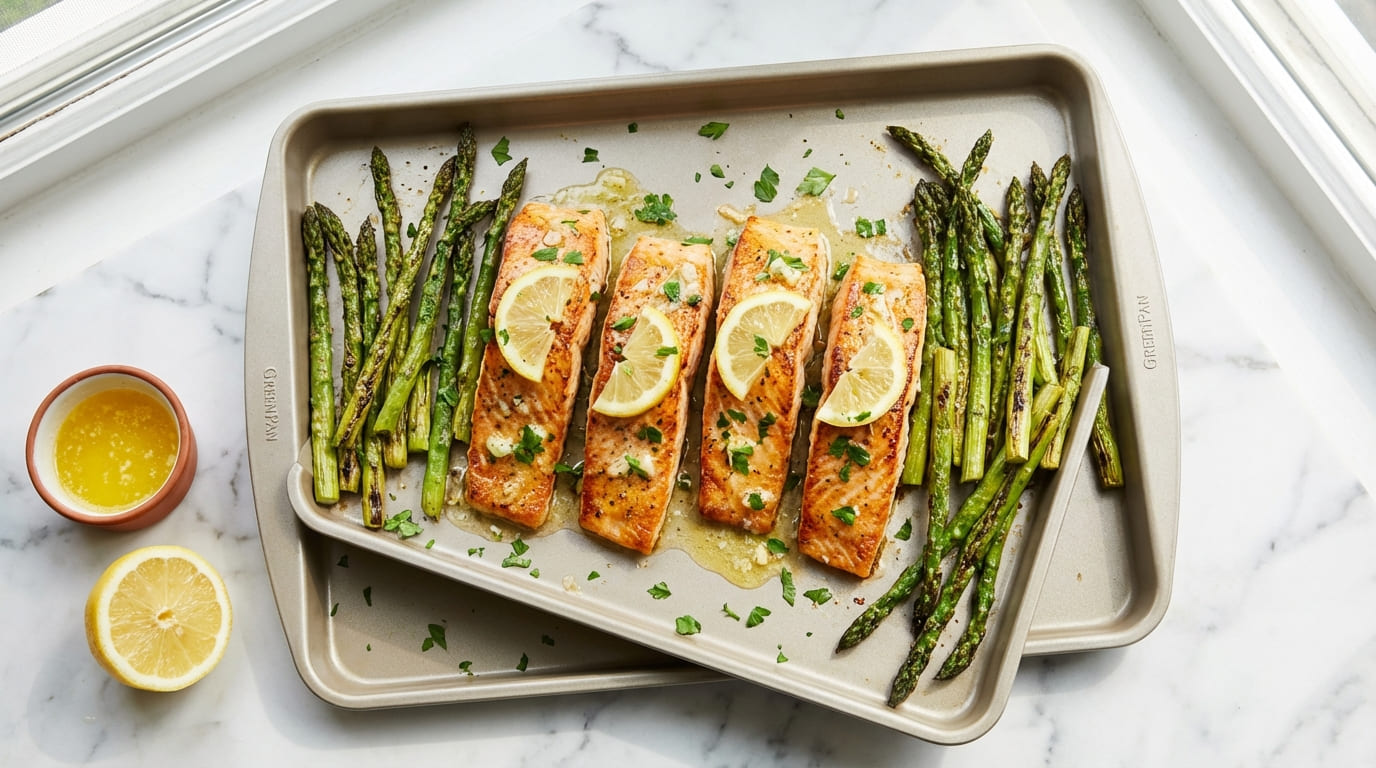
If there is one recipe that represents exactly what healthy eating should feel like — fast, fresh, genuinely delicious, and completely unglamorous in its simplicity — it’s this sheet pan salmon and asparagus. No marinating overnight. No complicated sauce work. No watching a pan on the stovetop. Twenty minutes from fridge to table, one pan to clean, and a result that feels like you made a real effort.
Salmon is one of those ingredients that gets out of its own way. It doesn’t need much. A well-seasoned piece of fresh salmon, roasted at the right temperature, will produce flaky, moist, deeply flavorful results with almost zero technique required. The challenge — the only challenge — is not overcooking it. This recipe solves that with a specific oven temperature and a short, precise cook time that has been tested and verified to produce perfectly cooked salmon every single time.
What elevates this recipe from basic to genuinely memorable is the lemon-garlic butter. It’s four ingredients: softened butter, fresh garlic, lemon juice, lemon zest, and a pinch of dill. You mix it in a small bowl with a fork in under two minutes, then spread it over the salmon fillets before they go into the oven. As the salmon roasts, that butter melts slowly across the surface and down the sides, basting the fish continuously and creating a golden, aromatic glaze that locks in moisture and carries the bright lemon and herb flavor into every bite of this lemon butter salmon.
“A great healthy salmon dinner doesn’t require sacrifice — it requires the right temperature, the right fat, and the confidence to leave the oven door closed.”
Asparagus is the ideal pairing here — and not just aesthetically. Medium-to-thick asparagus spears roast at almost exactly the same rate as salmon fillets at 220°C (425°F), which is the entire logic of this recipe. Both go on the pan at the same time, both come out at the same time, both are perfectly cooked. No staggering. No juggling. The asparagus takes on slightly charred, caramelized tips in the oven’s high heat while staying tender inside — which is a completely different (and far superior) experience to steamed or boiled asparagus.
This is also one of the healthiest dinners you can put together on a weeknight. Salmon is one of the richest dietary sources of omega-3 fatty acids, which support cardiovascular health, reduce inflammation, and contribute to brain function. A single fillet provides over 34 grams of complete protein. Asparagus adds dietary fiber, folate, and vitamins K, C, and A. The olive oil used on the asparagus provides heart-healthy monounsaturated fat. Combined, this is a macro-complete healthy salmon dinner that supports genuine nutritional goals without tasting like diet food.
For those who want wild-caught salmon — which has lower contaminant levels, higher omega-3 concentration, and a firmer, more mineral-rich flavor — quality makes a visible difference in a simple recipe like this. Wild-caught salmon from a reputable source arrives already portioned and vacuum-sealed, making weeknight cooking genuinely effortless. You can explore the full range of healthy recipes on the site for more meals that follow this same clean, ingredient-led philosophy.
And if seafood is your comfort food, the seafood comfort food collection has a growing library of restaurant-quality fish dishes that all come together with minimal effort. But first — let’s make this salmon. It’s the perfect place to start.
Chef’s Note: Pat the Salmon Completely Dry — This Step is Non-Negotiable
Before seasoning and before the butter goes on, take a sheet of paper towel and pat each salmon fillet completely dry on all surfaces — top, bottom, and sides. This is the single most important step for roasted salmon. Any surface moisture will steam the fish in the oven instead of roasting it, which gives you pale, soft skin and a wet texture rather than the golden, slightly caramelized exterior that makes baked salmon genuinely satisfying to eat. Salmon comes packed in liquid or has surface moisture from handling — always assume it needs drying regardless of how it looks. Ten seconds with a paper towel makes a significant and visible difference in the final result.
Recipe Notes
This easy fish recipe is as flexible as it is simple. Once you understand the core technique — high heat oven, dry fish, lemon-garlic butter, 12–15 minutes — you can adapt it endlessly to suit what you have on hand.
Salmon selection: Skin-on fillets are recommended for this recipe. The skin acts as a protective layer that prevents the bottom of the fish from drying out against the hot pan. It peels away cleanly after cooking if you prefer not to eat it. For flavor and nutrition, wild-caught sockeye or coho salmon is ideal — both have a firmer texture, richer color, and deeper, more mineral flavor than farmed Atlantic salmon. The difference is especially noticeable in simple preparations like this one.
Dairy-free option: Replace the butter with extra virgin olive oil or vegan butter for a completely dairy-free version. Mix the oil with the garlic, lemon juice, zest, and dill in the same way, and brush or spoon it over the salmon fillets. The result is slightly lighter but equally flavorful.
Vegetable variations: Asparagus is the ideal co-pilot for salmon because they cook at the same rate. Other vegetables that work at the same temperature and time include cherry tomatoes (halved), thin green beans, and broccolini. Dense vegetables like potatoes or Brussels sprouts need a 10–15 minute head start in the oven before the salmon goes in.
“Salmon doesn’t need to be complicated. Give it high heat, good fat, fresh lemon, and five minutes of actual attention — the oven does the rest.”
For a complete 20 minute dinner, serve this alongside fluffy white rice, quinoa, or crusty sourdough bread that can absorb the lemon-garlic butter left in the pan. A simple green salad with a light vinaigrette rounds the meal out without competing with the salmon.
Storage: Leftover salmon keeps in an airtight container in the refrigerator for up to 2 days. Reheat gently in a 150°C (300°F) oven for 8–10 minutes, covered loosely with foil to prevent drying. Avoid the microwave — it produces uneven, rubbery results. Cold leftover salmon also flakes beautifully over salads or into pasta the next day.
Frequently Asked Questions
How do I know when sheet pan salmon is done?
Salmon is cooked through when it flakes easily at the thickest point with a fork and the flesh has turned from translucent to fully opaque. The most reliable method is an instant-read thermometer — the internal temperature should reach 63°C (145°F). At this temperature the salmon is fully safe and still moist. Going higher results in dry, chalky fish.
What temperature should I bake salmon at?
220°C (425°F) is the optimal temperature for sheet pan salmon. It’s high enough to create light caramelization on the surface and tips of the asparagus, but short enough in cooking time (12–15 minutes) that the interior of the salmon stays moist and tender. Lower temperatures (180°C) produce more even cooking but lack the color and texture that high-heat roasting gives.
Can I use frozen salmon for this recipe?
Yes, but you must thaw it completely in the refrigerator overnight first. Never roast salmon from frozen — the exterior will overcook before the interior reaches a safe temperature. After thawing, pat it thoroughly dry before proceeding with the recipe. The moisture content of thawed salmon is higher than fresh, making the drying step even more critical.
Why is my salmon dry?
Overcooked salmon is the most common issue. At 220°C, a standard 170g fillet needs only 12–13 minutes. Check it at the 12-minute mark with a fork or thermometer. Also make sure to let it rest for 3–5 minutes after coming out of the oven — the residual heat continues cooking the fish gently, and skipping the rest period leads to moisture loss when you cut into it.
Can I cook thin asparagus alongside the salmon?
Thin asparagus spears cook much faster than medium or thick ones and will be overcooked and limp if placed in the oven at the same time as the salmon. For thin spears, add them to the sheet pan halfway through the salmon’s cooking time — around the 7-minute mark — so both finish together.
Is this recipe keto or low-carb?
Yes — this recipe is naturally low in carbohydrates. Salmon and butter are zero-carb, and a full serving of asparagus contains only about 8–10 grams of carbs (mostly fiber). This makes it an excellent option for keto, low-carb, and paleo eating plans without any modification to the recipe.