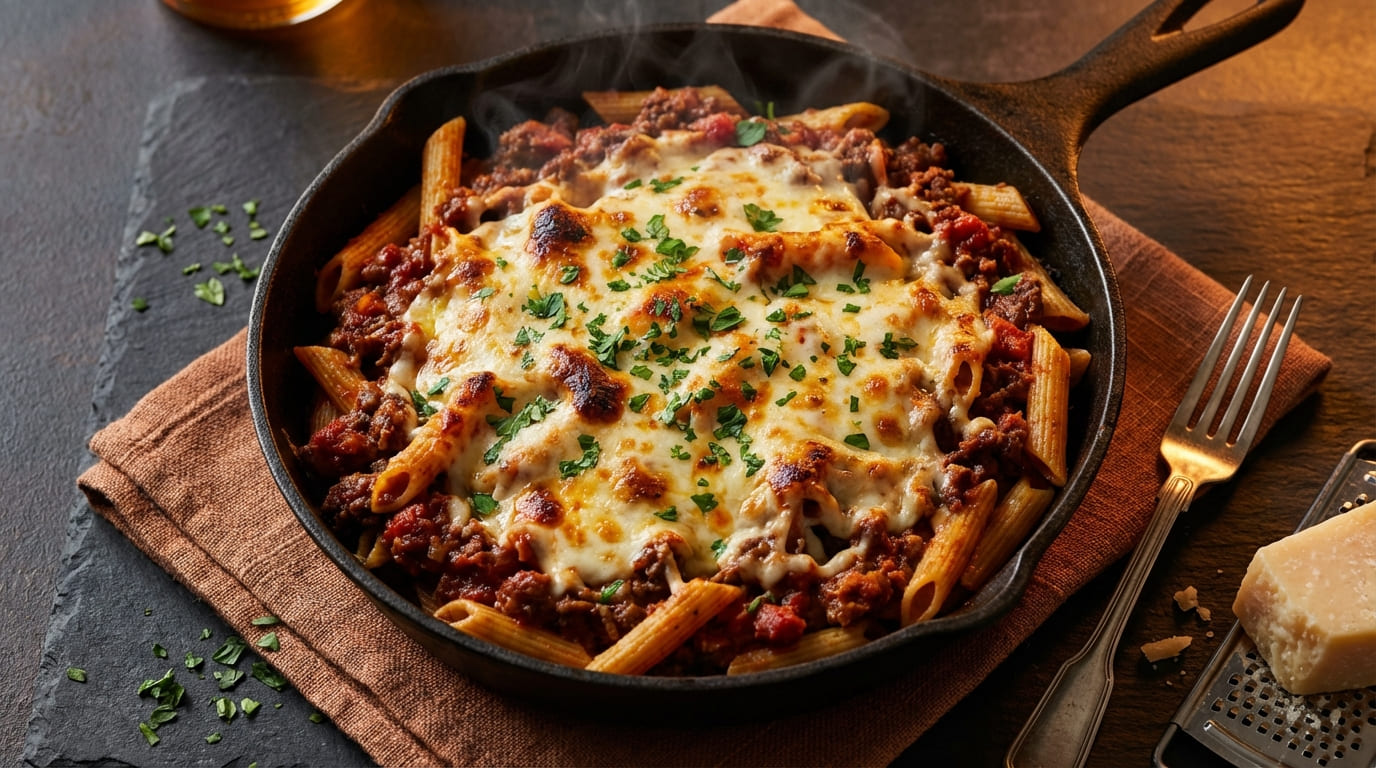
There’s a category of recipe that doesn’t get nearly enough credit. Not the kind of dish you make to impress guests at a dinner party. Not the kind that requires mise en place and a four-step sauce. I’m talking about the recipe that shows up on a Wednesday evening when you’re tired, the refrigerator looks half-empty, and you need something on the table in 30 minutes that everyone in the house will actually eat. This ground beef pasta skillet is that recipe.
Let’s be honest about what a weeknight dinner actually needs to accomplish. It needs to be fast — genuinely fast, not ‘fast if you prep for 45 minutes the night before’ fast. It needs to be satisfying in the way that only a warm, hearty meal can be after a long day. And it needs to produce as few dirty dishes as possible, because no one wants to spend the last hour of their evening scrubbing pots. This one skillet dinner delivers all three, without compromise.
What makes this particular recipe stand out from the dozens of similar dishes you’ve probably scrolled past is the technique. Rather than boiling pasta separately in another pot and then combining everything at the end — which requires extra time, extra washing, and produces less flavor — this recipe cooks the pasta directly in the skillet, right in the beef and tomato sauce. As the pasta absorbs the liquid, it also absorbs all the savory, beefy flavor from the sauce. The starch released from the pasta as it cooks simultaneously thickens the sauce to a glossy, clingy consistency that coats every piece. You get better pasta and a better sauce at the same time, in the same pan.
“The best weeknight dinners aren’t shortcuts — they’re smart. One pan, one process, one extraordinary result.”
Then there’s the cheese. This is a cheesy pasta dish in the most unashamed, unapologetic sense of the word. A generous layer of shredded mozzarella goes on in the final minutes, and the residual heat of the skillet melts it into a blanket of molten, stretchy cheese that pulls apart with every serving spoon. If you have access to a broiler, two minutes under high heat creates golden, slightly charred edges that take this from weeknight dinner to something you’d genuinely order at a restaurant.
The beef matters here too. Ground beef with a fat content of around 80/20 is ideal — the fat renders into the skillet as it browns, creating the flavor base for the entire sauce. If you’re particular about the quality of your meat, ButcherBox delivers 100% grass-fed ground beef directly to your door, and the difference in flavor compared to standard supermarket beef is noticeable — particularly in a sauce-forward dish like this where the beef is the star. For more ground beef dinner ideas that use the same quality-first approach, the full collection has you covered.
This recipe is also, crucially, a template. Once you make it once and understand the ratio of liquid to pasta, the browning step for the beef, and the cheese-melting finish, you’ll start riffing on it effortlessly. Add a diced jalapeño for heat. Swap the mozzarella for smoked gouda. Stir in a handful of frozen peas or spinach in the last two minutes for vegetables. Use orzo instead of penne for a finer texture. The easy beef pasta formula remains constant — everything else is yours to play with.
And if cheesy, satisfying pasta is your comfort food language, you’ll want to explore the full pasta comfort food collection as well — there’s an entire world of one-pan pasta dinners that follow this same approachable, big-flavored philosophy. But first: this skillet. Let’s make it.
Chef’s Note: Brown the Beef Properly — Don’t Skip This
The single most important step in this recipe is getting a proper sear on the ground beef before you add anything else to the pan. This means: high heat, no overcrowding, and — most critically — do not stir constantly. Add the beef to a hot cast iron skillet and let it sit undisturbed for 2–3 minutes. You want a deep brown crust to develop on the bottom of the meat before you break it up. That browning (the Maillard reaction) produces hundreds of new flavor compounds that are the difference between a bland, grey, boiled-tasting beef and a rich, savory, deeply flavored base. A cast iron skillet is ideal here because it holds heat evenly and gets hot enough to truly sear rather than steam the meat. If the skillet is too cool or too crowded, the beef will release water and stew in its own liquid — and you’ll lose all that depth before the dish even begins.
Recipe Notes
This ground beef pasta skillet is one of the most adaptable recipes in the quick dinner category, and part of its power is how easily the core formula takes on different flavors and ingredients without losing what makes it great.
Pasta shape: Short pasta with ridges or tubes works best here — penne, rigatoni, rotini, or farfalle. The ridges grab the sauce and the hollow centers fill with the beefy liquid as they cook. Avoid long pasta like spaghetti or linguine in this format, as they don’t cook evenly when submerged in a skillet sauce.
Cheese variations: Mozzarella gives you the classic stretch and melt, but this dish is equally good with smoked gouda (deeper, richer flavor), cheddar (sharper, tangier), or a mix of mozzarella and provolone for an Italian deli vibe. Whatever you use, shred it fresh from the block — pre-shredded cheese contains anti-caking agents that prevent smooth melting.
For the highest-quality result, the ground beef you start with makes a significant difference. ButcherBox 100% grass-fed ground beef has a cleaner, beefier flavor that comes through clearly in a sauce-forward dish like this. The fat content of 80/20 is also ideal — enough to keep the meat moist and to create a flavorful base in the skillet without the dish becoming greasy.
Make it spicier: Add ½ teaspoon of red chili flakes with the aromatics, or stir in a tablespoon of harissa paste with the tomato paste for a North African-spiced version that is genuinely excellent.
Add vegetables: Frozen peas, diced zucchini, or a large handful of baby spinach can be stirred in during the last 3–4 minutes of pasta cooking. They’ll soften into the sauce without turning mushy and add color, nutrition, and variety to this weeknight dinner.
“A one skillet dinner isn’t a compromise — it’s a philosophy. When every ingredient cooks together, the flavors become something none of them could achieve alone.”
Storage: This dish stores well in the refrigerator for up to 3 days. The pasta will absorb the remaining sauce as it sits, so when reheating, add a splash of beef stock or water to loosen it back to a saucy consistency. Reheat in a skillet over medium-low heat with the lid on, stirring once or twice, until heated through. Add a fresh scatter of mozzarella on top while reheating if you want to revive the cheese element.
Frequently Asked Questions
Can I cook the pasta directly in the skillet without boiling it separately?
Yes — that’s exactly how this recipe works. The pasta cooks directly in the beef and tomato sauce, absorbing the liquid and the flavor at the same time. The key is maintaining the right liquid-to-pasta ratio and stirring every few minutes to prevent sticking. The result is pasta with far more flavor than anything boiled in plain salted water.
What kind of ground beef is best for this recipe?
An 80/20 fat ratio is ideal — it has enough fat to create a flavorful sear and a rich sauce without making the final dish greasy. Leaner beef (90/10 or higher) can work but produces a drier, less flavorful result. For the best outcome, use fresh, high-quality ground beef from a trusted source.
Can I use a different type of pan if I don’t have a cast iron skillet?
Yes. A wide, heavy-bottomed stainless steel pan or a large non-stick skillet both work. The main difference is the quality of the sear on the beef — cast iron gets hotter and browns more effectively than non-stick. Whatever pan you use, make sure it’s large enough to hold all the ingredients comfortably with room to stir.
How do I prevent the pasta from sticking to the bottom of the skillet?
Stir the pasta every 3–4 minutes while it cooks under the lid. Make sure there’s enough liquid in the pan — if it looks too dry before the pasta is done, add a small splash of beef stock or water. Keeping the heat at medium-low rather than a rolling boil also helps prevent sticking and uneven cooking.
Can I make this dish ahead of time?
The beef sauce (without pasta) can be made up to 2 days ahead and stored in the refrigerator. When ready to serve, reheat the sauce in the skillet, add fresh stock and pasta, and cook as directed. This is a great approach for meal prep — you get a genuinely fresh-tasting result with only 15 minutes of active cooking on the day.
Is this recipe suitable for kids?
Absolutely — skip the chili flakes for a completely mild version that most children love. The cheesy topping and familiar pasta shape make it an easy sell. You can also reduce the garlic slightly for more sensitive palates without affecting the overall flavor balance significantly.